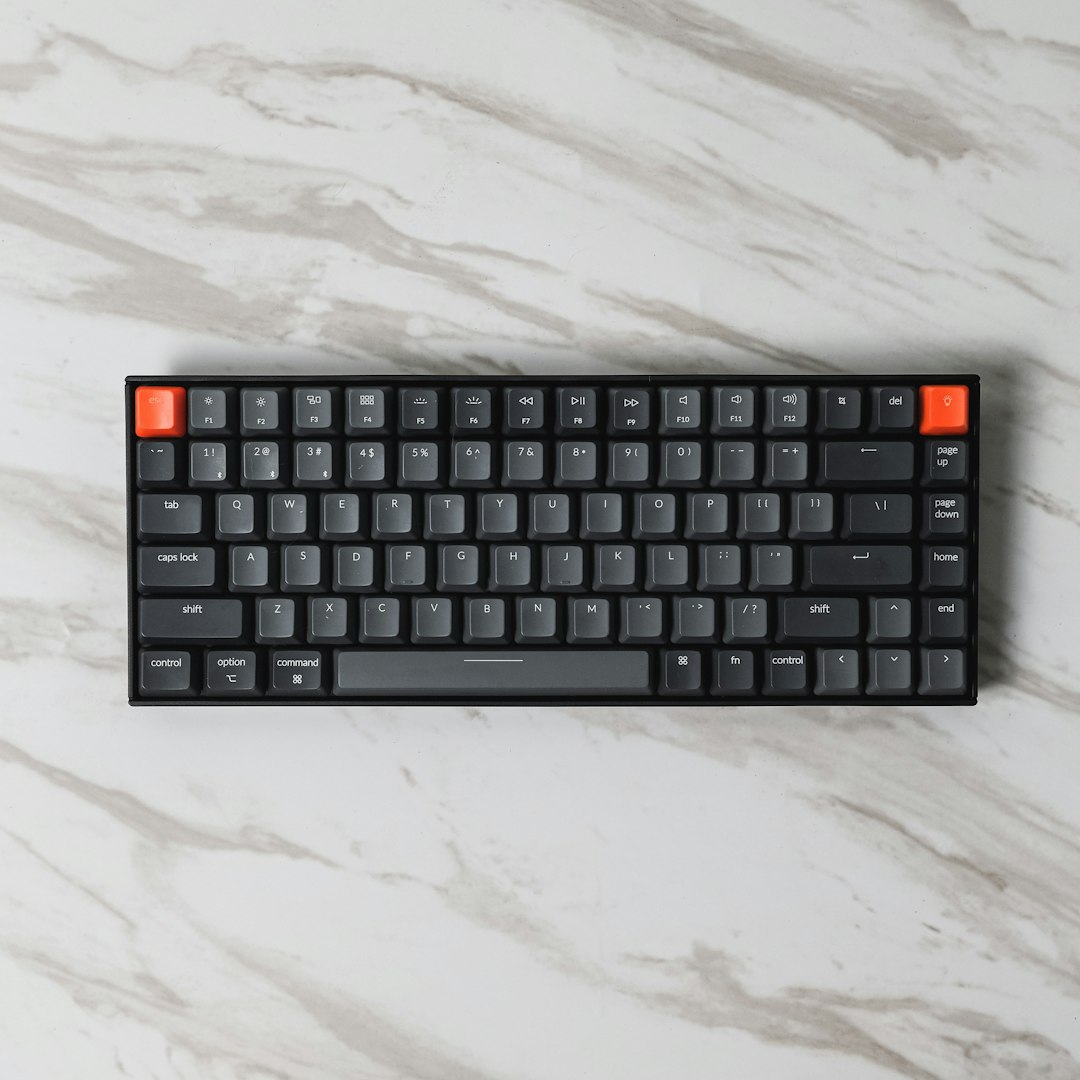
A mechanical keyboard can keep its character without becoming the loudest thing in the room.
One enthusiastic typing session can turn into a small social problem when every bottom-out carries across a quiet office, library table, dorm room, or late-night apartment. Silent switches soften the two sharpest sounds in a keystroke: the stem hitting the housing on the way down and snapping back on release, usually with silicone dampers built into the stem.
That does not make a board literally silent. Keycaps still tap, stabilizers can rattle, and a hollow case can amplify each press. But a well-built keyboard with silent switches changes the sound from a crisp clack to a subdued, lower-pitched thud—far easier for nearby people to live with.
Start with the feel that matters most


Silent switches damp the stem’s bottom-out and return, but stabilizers, a hollow case, and thin keycaps can remain conspicuous. Confirm that the board accepts MX-style 5-pin switches; 3-pin plates or some non-MX sockets may require clipping pins or rule these out. Feel is final: linear switches favor fluid travel, while Crystal adds feedback. A small pack is the safest test before committing to a full board.
What “quiet” actually covers
Dampened silent switches use soft pads on the stem to cushion both impact points: the downstroke when a key bottoms out and the return when it rises. Lubricant helps by reducing scratch between stem, housing, and leaf, while a well-treated spring is less likely to produce the faint metallic ping or crunch associated with spring movement.
That does not make a keyboard uniformly silent. Large keys can rattle independently because their stabilizers move in separate housings; a spacebar often remains the loudest key even with excellent switches. A hollow case can amplify low-frequency impact, thin ABS keycaps can add a sharper clack, and a hard desktop reflects sound upward. Foam, stabilizer tuning, thicker keycaps, and a desk mat can therefore matter as much as the switch choice.
The comparisons that follow treat quietness as a relative, built-keyboard result, not a laboratory decibel promise. Manufacturer listings were checked for switch type, mounting, stated travel and force details where supplied, and silent-dampening claims. Actual pitch, loudness, and feel still vary with board, lubrication consistency, keycaps, and typing force.
Each option is assessed by the factors that remain meaningful across real keyboards, rather than by unsupported noise rankings.
Whether the listed switch is built to soften bottom-out and return impacts, plus its likely sound character.
Linear or tactile response, stated mounting compatibility, and whether published specifications are complete enough to compare.
How stabilizers, case construction, caps, and desk surface may change the result after installation.
If the board still sounds busy after a switch swap, inspect and tune the stabilizers first. Their rattle can mask the improvement from even very quiet switches.
Linear speed or a quiet tactile cue
-
Linear for uninterrupted rhythm
Silent linears move smoothly from top to bottom, making rapid repeats and light typing feel effortless. Fairy is the refined choice; Sea Salt and Nude Rosa offer softer-priced or visual alternatives.
ChooseA clean, bump-free stroke for fast, low-fatigue input.SkipExpecting a physical confirmation point before actuation. -
Tactile for deliberate typing
A tactile bump signals each press without requiring a loud click. Crystal Silent Tactile proves that a well-damped tactile switch can remain office-considerate.
ChooseA distinct bump that helps pace prose, shortcuts, and accuracy.SkipAssuming tactile feedback automatically creates more noise.
Tactility changes force feedback, not inherently volume. In either style, damped stem rails and bottom-out cushioning matter more than the presence of a bump. For anyone deciding whether mechanical keyboards suit daily use, switch feel often determines satisfaction long after the novelty of quietness fades.
Akko V3 Fairy: the polished silent-linear pick
01
Best for smooth, quiet typing in shared environments
The Akko V3 Fairy is the stronger choice when a board needs to stay pleasantly restrained across long stretches of typing, not merely sound quieter on a spec sheet. Its 50gf linear weighting gives keystrokes enough resistance for deliberate office work without making rapid input feel laborious.
Factory lubrication on the rails helps the switch arrive with a smooth, even travel character, while the silent design takes the edge off both press and return noise. With a standard MX stem, it also fits the broad aftermarket keycap ecosystem; the 5-pin housing calls for a quick check that the keyboard PCB accepts five-pin switches or can accommodate clipped alignment pins.
- Smooth, consistent travel out of the box
- Subdued sound on press and release
- 50gf weight suits extended typing
- MX stem supports most keycaps
- Softer bottom-out lacks a crisp mechanical finish
- Costs more than basic budget silent linears
- Five-pin fit is not universal
In brief Fairy prioritizes an even, civilized full-board feel over bare-minimum cost. The damping is effective, but the landing can feel more cushioned than sharply defined.
For shared-space linear builds, the V3 Fairy earns its lead through consistent smoothness and controlled noise rather than a flashy spec. It is especially convincing when every key on a full board should feel similarly composed through a workday. The trade-off is familiar to many silent linears: bottom-out is softer and less crisp, so those who enjoy a firm, defined landing may prefer a non-silent switch or a quieter tactile alternative.
EPOMAKER Sea Salt V3 Silent: a low-cost route to a quieter board
Top choice for affordable factory-lubed silence
At roughly $15 for 35 switches, the Sea Salt V3 Silent is compelling for smaller layouts, testing a silent build, or replacing only the noisiest keys. It is a factory-lubed, 5-pin PCB-mount silent linear intended for hot-swap mechanical keyboards that accept this footprint.
The sensible purchase is based on coverage, not just the low pack price: 35 switches will not fill most full-size, TKL, or 75% boards. Confirm the board’s hot-swap compatibility and pin support, then count every key—including the numpad—before ordering.
- Low entry cost for silent linears
- Factory lubrication avoids immediate modding
- 5-pin design suits compatible hot-swap PCBs
- Useful 35-switch pack for compact projects
- 35 switches rarely cover a standard board
- Linear feel offers no tactile feedback
- Loose stabilizers remain noisy
- Resonant cases can still sound hollow
The Sea Salt V3 Silent makes the strongest case when a quiet linear switch is needed without buying a premium full set. It can substantially soften keypress impacts, but it cannot silence rattly stabilizers or cure a case that amplifies resonance. For a larger board, compare per-switch cost only after accounting for the number of packs required.
EPOMAKER Nude Rosa Silent Linear: quiet switches with visible character
A smooth, quiet option for custom keyboard builds
The Nude Rosa Silent Linear is for a build where the switch itself is part of the palette, not merely hidden hardware. Its rosy housing can add a deliberate accent beneath translucent keycaps, through an open-frame case, or around a board with generous switch cutouts.
In a conventional enclosed case with opaque keycaps, that color is largely invisible. There, the more meaningful reasons to choose it are its factory-lubed linear travel, silent-damping design, and five-pin PCB-mount fit—not the finish.
- Rosy housing suits exposed-switch builds
- Factory lubrication supports smooth linear travel
- Silent damping softens keypress impacts
- Five-pin PCB-mount design aids stability
- Color disappears under opaque caps and closed cases
- 35-switch pack may not complete larger layouts
- Other board parts can remain the loudest elements
Nude Rosa Silent Linear earns its place in a visually considered custom build without treating appearance as a substitute for a good switch. The damped, pre-lubed linear design should keep keystrokes restrained, but stabilizers, keycaps, and case resonance still set the room-level result. Confirm five-pin support and buy enough packs before committing to a full board.
EPOMAKER Crystal Silent Tactile: a real bump without the clack
For quieter typing with a tactile feel
The Crystal Silent Tactile is the pick for a shared desk that still needs an unmistakably mechanical response. Its damped tactile design aims to mute the sharp impacts at the top and bottom of travel, while the tactile event gives each press more definition than a silent linear.
Factory lubrication makes it a practical drop-in option for compatible 5-pin hot-swap boards. The 35-switch pack is best suited to a compact board, a partial replacement, or a trial before committing to a full-size build.
- Tactile feedback remains present rather than softened into a linear-like press
- Damped design targets both major travel impacts
- Factory lubrication avoids an immediate tuning project
- 5-pin PCB mount offers stable compatibility on matching boards
- A 35-switch pack will not cover many full layouts
- Tactile character is highly subjective: bump shape and position matter
- Damping cannot silence loud stabilizers, keycaps, or a resonant case
- Requires a board that accepts 5-pin switches, or pin modification
In brief A sensible quiet-tactile choice when a smooth linear feels too vague. It preserves a distinct cue while keeping the switch itself from becoming the loudest part of the keyboard.
Crystal Silent Tactile makes the strongest case for quiet typists who still want to feel a deliberate actuation cue. The silencing treatment addresses the impacts that make ordinary tactiles conspicuous in a shared room, but it does not make switch preference objective.
A bump can feel crisp, early, rounded, or resistant depending on the typist and board. For anyone who misses tactile confirmation on a silent linear, this is the more convincing direction—provided the 35-switch count and 5-pin fit suit the build.
Build the quiet result, not just a quiet switch
-
Confirm the board’s installation method
Hot-swap sockets make testing and replacement simple; a soldered PCB requires desoldering every switch. Check the socket’s stated switch compatibility rather than assuming any MX-style switch will fit.
-
Match the pin pattern before checkout
All four picks use a five-pin housing. A five-pin PCB accepts them directly; a three-pin plate or PCB may require carefully trimming the two plastic locating pins, so a native five-pin fit is preferable.
-
Count switches against the actual layout
A 60% board commonly needs 61–64 switches, a 65% around 67–68, a TKL 87, and a full-size 104. Buy several spares for testing and future replacements—especially when choosing 35-switch packs.
-
Treat large keys as a separate noise problem
Spacebar, Enter, Backspace, and Shift depend on stabilizers, not switch dampers. Properly balanced, lubed stabilizers and a stable wire eliminate rattle that can overwhelm an otherwise silent build.
-
Finish the acoustic chain
Thicker PBT caps usually sound lower-pitched than thin ABS, while sensible case damping can reduce hollowness without making the board feel mushy. A desk mat also cuts reflected impact noise and vibration reaching a shared tabletop.
Switch silence reduces key impacts; careful board setup determines whether the whole keyboard stays discreet.
For a polished quiet-linear build, Akko V3 Fairy is the strongest all-round pick: its 50gf weighting suits long sessions without feeling flimsy. EPOMAKER Sea Salt V3 Silent is the sensible value choice for light linear fans, while Crystal Silent Tactile is the clear recommendation when a defined bump matters. Choose Nude Rosa when an exposed-switch board also needs visual personality.
Prioritize the daily key feel, then confirm the board accepts five-pin switches and that the pack covers the layout. Buying a small batch first is worthwhile when possible.
If a finished board still rattles or rings, inspect and lubricate stabilizers, then address case resonance, keycaps, and the desk surface. Silent switches cannot cure those noises alone.